

The old 2015+ WRX downpipe advice needs a reset. Before COBB Project Green Speed, it was common to tell VA WRX owners to buy a catted or catless j-pipe, flash a Stage 2 map, and enjoy one of the biggest bolt-on power gains for the FA20DIT. That is not the current 2026 buying path.
This guide covers the 2015-2021 VA WRX. The 2022+ VB uses its own j-pipe fitment. For a street-driven U.S. car, an aftermarket VA j-pipe now means a custom-tune plan and an emissions review before the part goes on the car. COBB discontinued its 2015-2021 WRX GESi J-pipes and associated OTS maps effective January 31, 2022.
Quick answer: the best current 2015-2021 WRX j-pipe for most custom-tuned manual cars is the ETS GESI Gen2 Catted J-Pipe because it uses a modern GESI catalyst and is still listed through Subaru-focused retailers. The MAPerformance Rev 4 catted j-pipe has the deepest owner-review archive for manual VA WRXs. Invidia remains the easiest manual/CVT fitment split to shop. Catless j-pipes are a poor fit for registered street cars.
Choose Your WRX J-Pipe Path
What Owner Reports Add
Recent ETS and MAP Rev 4 owner threads make the same point from opposite ends of the price range: the catalyst and calibration matter more than the tubing alone. Some ETS and MAP owners report long stretches without a catalyst-efficiency code. Others report a P0420 after months or years, including on GESI-equipped setups. A GESI catalyst can justify extra spend; readiness remains car- and calibration-specific.
Sound is the other pattern worth taking seriously. Owners moving from the factory j-pipe describe a bigger change in cold-start volume and highway drone than the product photos suggest. The catback decides how that extra volume lands in the cabin, so a daily-driven WRX needs a full exhaust plan rather than a j-pipe picked in isolation.
Best Catted J-Pipes For 2015-2021 WRX 6MT
| Pick | Best for | Notes | Main drawback |
|---|---|---|---|
| ETS GESI Gen2 | Custom-tuned 6MT street/track builds | 3 inch 304 stainless, Gen2 GESI catalyst | Not CARB legal; cannot ship to CA from some retailers |
| MAPerformance Rev 4 | Buyers who want owner feedback | 2015-2021 WRX 6MT, substantial retailer review archive | Custom tune and emissions review still required |
| Invidia wideband catted | Tuners needing extra bung | 76 mm divorced-wastegate design, bottom-mounted high-flow cat | Manual-only routing |
| TurboXS catted | Lower-cost catted build | Current Subaru retailers still list it | Less review/source depth than MAP or Invidia |
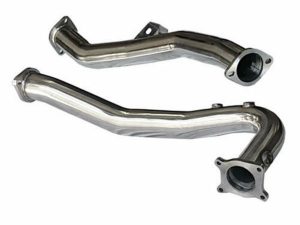
Best Current 6MT Pick
ETS GESI Gen2 Catted J-Pipe for 2015-2021 WRX
Check Latest PricePrice and availability may change
The ETS GESI Gen2 catted j-pipe is the best current starting point for a manual 2015-2021 WRX owner. Retailer listings show 3 inch 304 stainless construction, a Gen2 400-cell GESI catalyst, and direct factory-replacement fitment.
RallySport Direct lists the ETS part as not CARB legal and ineligible for California shipment. Check the local emissions requirement before putting it in the build plan.
Recent owner reports put the ETS premium in context. The GESI catalyst is the extra hardware buyers are paying for. Several owners report no P0420 after the swap, while others report one after time. The inspection result still depends on the individual car and calibration.
Buy if: you have a 6MT VA WRX, a tuner who approves the part, and you want a modern catted/GESI option.
Skip if: you live in California, need inspection readiness certainty, or expected to flash an old COBB Stage 2 OTS map.
Review evidence: current retailer availability is good; long-term owner sentiment is more mixed because emissions-readiness and tune support depend heavily on the calibration.
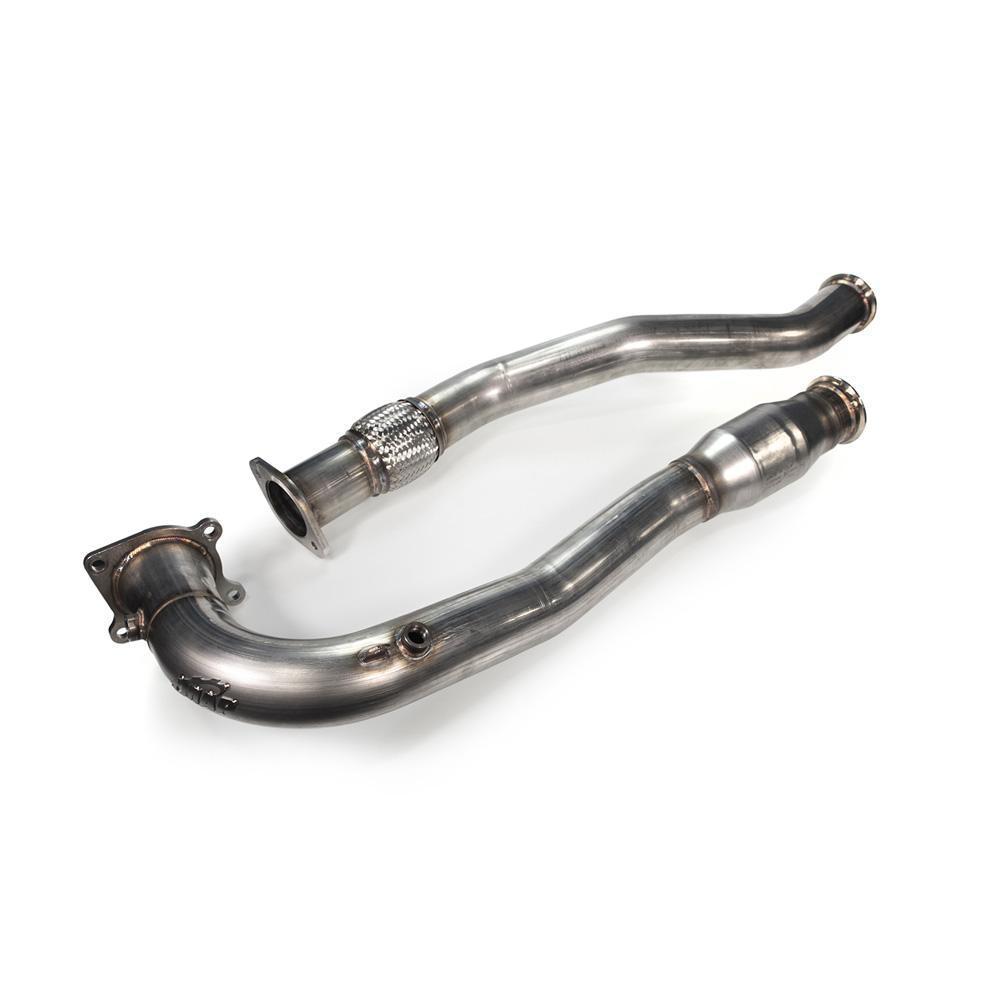
Best Owner Feedback
MAPerformance Rev 4 Catted J-Pipe for 2015-2021 WRX
Check Latest PricePrice and availability may change
MAPerformance’s Rev 4 catted j-pipe has unusually deep retailer feedback for this category. The page lists 2015-2021 WRX applications, stainless construction, a 3 inch V-band clamp, hardware, and an optional adapter path for the stock catback.
Retailer reviews mention fitment, a deeper exhaust tone, faster boost response, and stronger pull after calibration.
The current owner discussion centers on value. Several MAP owners report clean operation after calibration, while a catted aftermarket j-pipe can still bring a P0420 later. The savings make the most sense when the tuner already knows the Rev 4 and the car does not need inspection certainty.
Buy if: you want a widely used 6MT catted j-pipe with a lot of public buyer feedback.
Skip if: your tuner specifically wants a GESI catalyst or you need a product with explicit CARB approval.
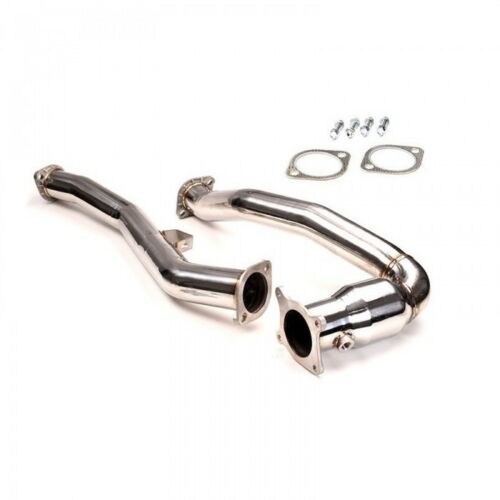
Best Invidia 6MT
Invidia Catted J-Pipe with Wideband Bung for 2015-2021 WRX
Check Latest PricePrice and availability may change
Invidia is still one of the easiest VA WRX j-pipe brands to shop because retailers clearly split manual and CVT applications. This manual-transmission wideband-bung version uses 76 mm piping, a divorced-wastegate layout, SUS304 stainless construction, a bottom-mounted high-flow catalytic converter, and extra sensor provision.
That wideband bung can matter on a custom-tuned car. It also means you should not buy purely by price from a generic listing. Confirm whether you are looking at the manual version, the CVT version, the lower-cat version, or a two-bung version before ordering.
An owner who paired a catted j-pipe with an Invidia R400 catback reported a much louder cold start. Cabin sound still comes down to the catback and resonated midpipe, so hear a similar full system before committing if cabin volume matters to you.
Buy if: your tuner wants a familiar Invidia 6MT catted j-pipe with sensor flexibility.
Skip if: you own a CVT WRX or your local rules require explicit emissions certification.
Budget Catted 6MT
TurboXS Catted J-Pipe for 2015-2021 WRX
Check Latest PricePrice and availability may change
The TurboXS catted j-pipe is the budget pick because current Subaru retailers list it at a lower price than many premium catted options. It can make sense for a cost-controlled 6MT build where your tuner is comfortable with the hardware and you are not chasing a particular catalyst brand.
TurboXS has less published owner feedback and emissions documentation than the other picks here. Older owner posts praise the price, fitment, and factory-like catalyst placement. One recent P0420 thread describes a TurboXS-equipped car with repeated rear-O2-sensor replacements. Ask the tuner how they would diagnose a readiness issue before choosing it for a budget build.
Buy if: price matters and your tuner has no issue with the TurboXS part.
Skip if: you want the strongest documentation, the deepest owner feedback, or a GESI-catalyst listing.
Best CVT J-Pipe Option For 2015-2021 WRX
Best CVT Fitment
Invidia Catted J-Pipe CVT for 2015-2021 WRX
Check Latest PricePrice and availability may change
The CVT WRX needs its own routing. New Provisions Racing lists this Invidia catted CVT j-pipe for 2015-2021 WRX and 2014-2018 Forester XT applications, with 3 inch mandrel-bent 304 stainless tubing, a high-flow catalytic converter, an extra oxygen-sensor bung, and hardware.
The CVT uses its own j-pipe routing, and its tuning support differs from the 6MT. Bring the transmission strategy into the conversation before adding a major exhaust-flow change.
Buy if: you have a CVT VA WRX and your tuner confirms the part, tune, and transmission strategy.
Skip if: you are trying to use manual-transmission maps or parts.
Tuning And OTS Maps
You can still custom tune a 2015-2021 WRX with an aftermarket j-pipe. The important split is map type: COBB’s current U.S.-market OTS maps retain the factory catted j-pipe, while an aftermarket pipe needs a calibration written for that exact hardware. COBB discontinued its VA WRX GESi j-pipes and the related OTS maps in January 2022; that ended the old buy-a-pipe-and-flash-Stage-2 package, not custom tuning.
Choose the tuner and calibration path before ordering the pipe. Confirm the exact j-pipe, intake, boost-control hardware, fuel, transmission, and catalyst-monitoring approach with them. A catted aftermarket part can still create inspection or readiness issues, and GESI branding is not a CARB Executive Order.
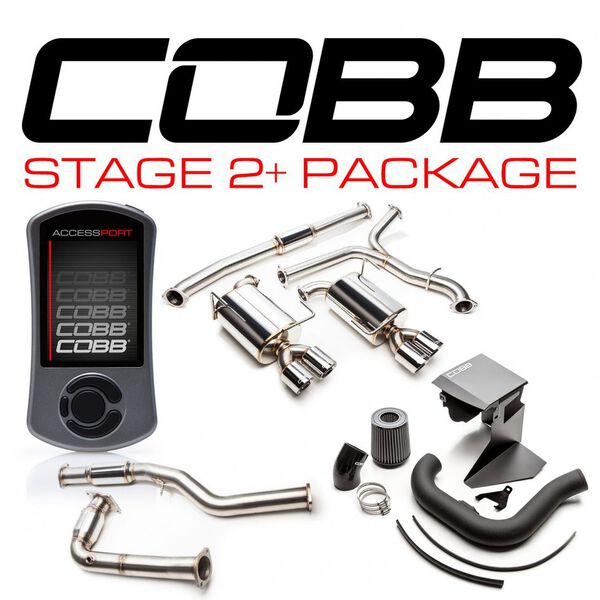
Best OTS-Supported Alternative
COBB NexGen Stage 2 Power Package for 2015-2021 WRX
Check Latest PricePrice and availability may change
For an OTS-map VA WRX, a current WRX Stage 2 package retains the factory j-pipe. A custom-tuned car can use an aftermarket pipe when the tuner approves the full parts list and the emissions tradeoff suits the car’s use.
Catless J-Pipes On Street-Driven WRXs
Catless j-pipes remove the catalytic converter and bring inspection, emissions, smell, noise, and boost-control problems with them. Owner and tuner discussion around catless VA WRXs repeatedly comes back to boost creep, check-engine-light/readiness issues, rasp, and the need for extra tuning or external-wastegate planning. That makes them a poor fit for a registered street car.
Boost creep is the big mechanical warning. Tuner guidance commonly describes catless FA20DIT setups as especially prone to high-rpm creep in cold weather once exhaust restriction is removed. If wastegate duty is already effectively zero and boost is still climbing, a calibration cannot simply “tune it out.”
Used marketplaces and old affiliate listings still carry catless parts from Invidia, Tomioka, Mishimoto, and others. Those listings reflect the old Stage 2 market, not a sensible 2026 street build. A registered street car is better served by a catted part or no j-pipe at all.
Install And Tuning Notes
A tune is required. Install the j-pipe only with a calibration that accounts for exhaust flow, boost control, fueling, and catalyst monitoring.
Plan the whole exhaust. Some j-pipes include adapters for a stock catback, some are easier with an aftermarket 3 inch catback, and some use specific V-band or two-bolt connections.
Replace hardware and gaskets. Turbo studs, catback bolts, gaskets, and grounding-strap hardware are common pain points. GrimmSpeed sells a dedicated VA WRX j-pipe hardware kit for this reason, and owner reviews often say not to start the job without fresh hardware.
Expect more sound. A j-pipe changes exhaust tone more than many catbacks do. Resonators, mufflers, and catalyst position affect drone and rasp.
Watch boost creep. Catless and very free-flowing setups can make boost control harder. If boost climbs after wastegate duty has been pulled back, log the car and have the tuner check the wastegate hardware, exhaust configuration, and calibration.
Readiness matters. Passing a tailpipe-style test, visual inspection, OBD readiness check, and CARB legality are different things. Post-Green-Speed Accessport tuning cannot be treated like old advice that disabled catalyst codes, so P0420/readiness risk needs to be part of the plan.
FAQ
Is a downpipe the same thing as a j-pipe on a WRX?
On the 2015-2021 WRX, people usually use “downpipe” and “j-pipe” for the post-turbo exhaust section. “J-pipe” is the more chassis-specific term because of the pipe shape.
Do I need a tune for a 2015-2021 WRX j-pipe?
Yes. A j-pipe is a tune-required modification. Current COBB OTS support is not the same as old Stage 2 advice, so confirm the tune path before buying the part.
Will a GESI catted j-pipe guarantee that I will not get a P0420?
No. Owner reports include clean operation and intermittent P0420s on GESI-equipped cars. Catalyst condition, calibration, oxygen-sensor operation, and exhaust leaks can all affect the result. Keep the factory j-pipe if inspection certainty is the priority.
Can I keep the factory catback with an aftermarket j-pipe?
Often, yes, but the connection depends on the j-pipe’s exit flange and the catback. Some combinations need an adapter. Confirm the flange, gasket, and required hardware before ordering.
Can I still run a COBB Stage 2 downpipe map?
COBB discontinued the 2015-2021 WRX downpipe power packages and removed associated OTS maps in 2022. Build around a current supported package or a tuner-approved custom calibration instead.
Is a catted j-pipe legal?
A catalytic converter alone does not establish CARB legality or inspection readiness. Check the product’s CARB approval, your state rules, and the planned calibration before buying.
Is a catless j-pipe worth it?
Not for a street-driven WRX. The power upside is outweighed by legality, smell, inspection, catalyst-monitoring, and boost-control problems for most owners.
What is the safest modern alternative to a j-pipe?
For many VA WRXs, a supported intake, turbo inlet, intercooler, catback, and custom or OTS-supported tune path is safer than modifying the catalyst section. See the current WRX Stage 2 kits guide for the newer post-Green-Speed direction.
Bottom Line
If you are building a custom-tuned 2015-2021 WRX and your tuner approves the plan, start with the ETS GESI Gen2, MAPerformance Rev 4, or the correct Invidia catted j-pipe for your transmission. If you need a simple street-legal upgrade with clear OTS support, skip the j-pipe and use a current supported power path instead.